
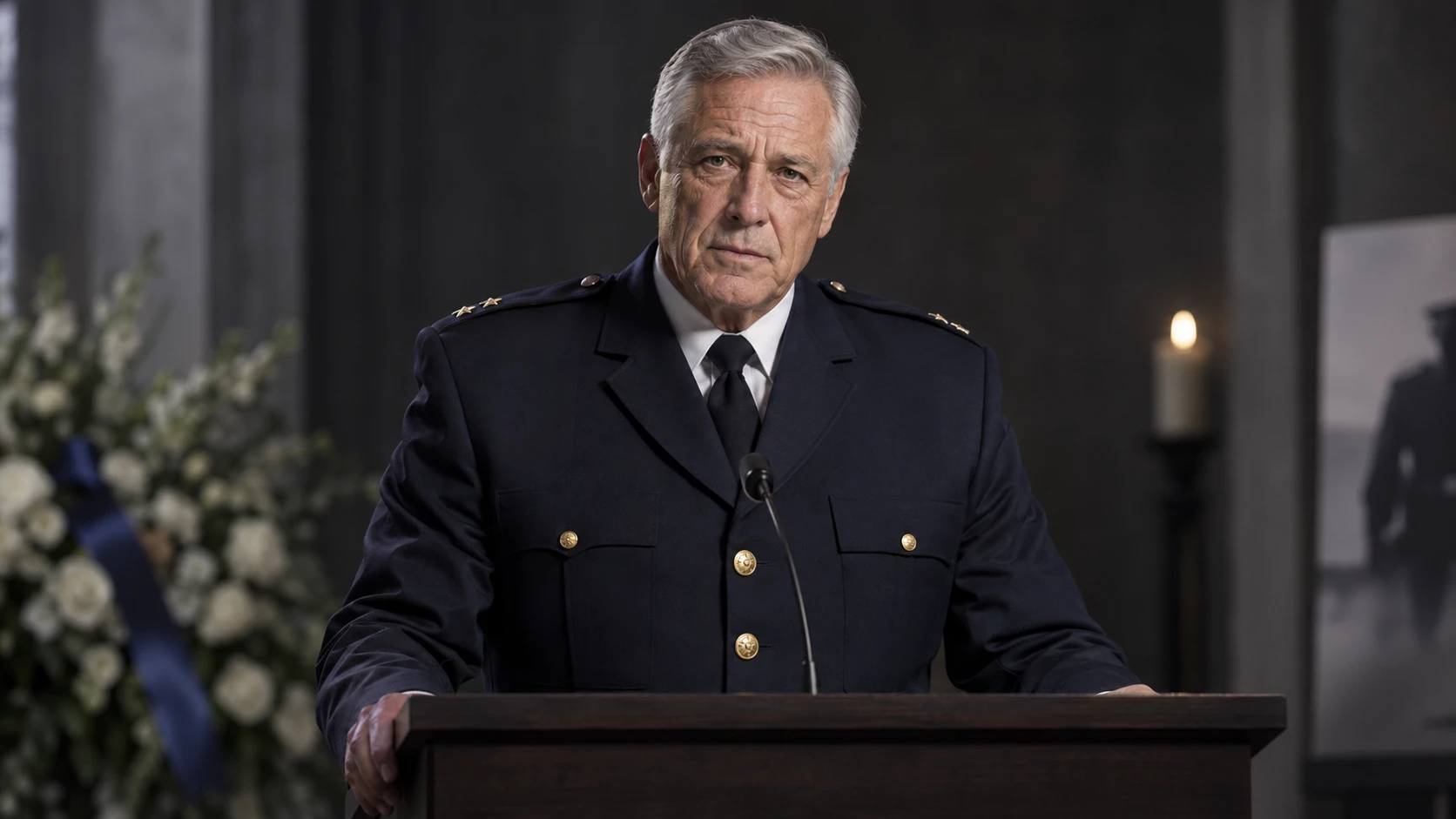
You do not have to fit an entire life into a few minutes. Help the people gathered recognize someone they loved.
A familiar saying. The way they answered the phone. A small kindness nobody thought to record. Those details can give you a beginning when a formal account of a life feels impossible to write.
Gather memories before sentences.
Write down what comes to mind without worrying about order. Ask a few people close to them what they remember. Look for one quality or connection that keeps returning: patience, humor, loyalty, curiosity, the habit of showing up.
When remembering a police officer, leave room for the person known away from the uniform. Work mattered, but so did friendships, family life and the ordinary habits that made them familiar.
Choose a few moments.
Introduce yourself and explain your connection. Give listeners enough background to understand the memories you share. Then tell one or two stories in words you would comfortably use in conversation.
A story does not have to be dramatic. Something small and true can be enough. Gentle humor may fit an affectionate memory, but leave out private information or anything that could embarrass the family.
Check the details with someone close.
Ask a family member to review names, relationships and the tone. Let the family's wishes guide any spiritual language. If you are uncertain whether a memory belongs in a public tribute, ask before including it.
Close with gratitude, a goodbye or something you will carry forward. You do not need to explain the death or draw a lesson from it.
Make speaking a little easier.
Read the draft aloud and compare its length with the time agreed with the service organizer. Shorten sentences that are hard to say. Print a readable copy and mark places to pause. Arrange for someone to take over if speaking becomes too difficult.
For a chaplain helping with the writing, listening comes first. Offer structure while preserving the speaker's own words. The goal is a tribute that sounds like someone remembering a person they knew.
Support for survivors and families →
Resources for chaplains and caregivers →
Explore the ChaplainUSA Blog →