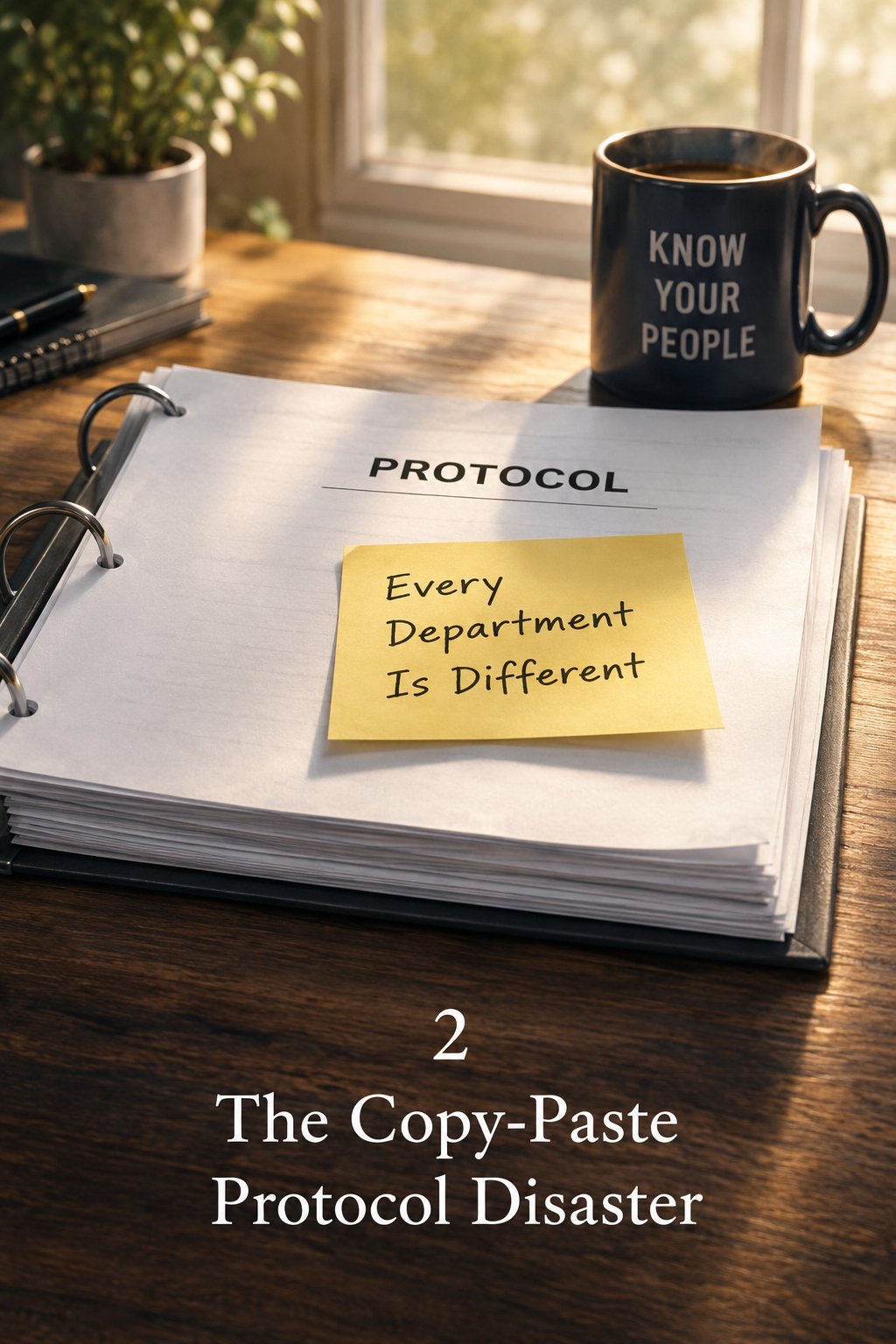
The Copy-Paste Protocol Disaster
A borrowed protocol can miss the structure, resources, and people of the department that must use it.
Read the article 1 min read Donate
ChaplainUSA, a John Cooley legacy project.
When an officer dies in the line of duty, the clock starts immediately. The family needs someone at the door. The department needs someone making decisions. The community is already watching.
The days that follow will be amongst the most consequential and complicated in a department’s history. The problem is most departments have no institutional memory of a line-of-duty death.
About John
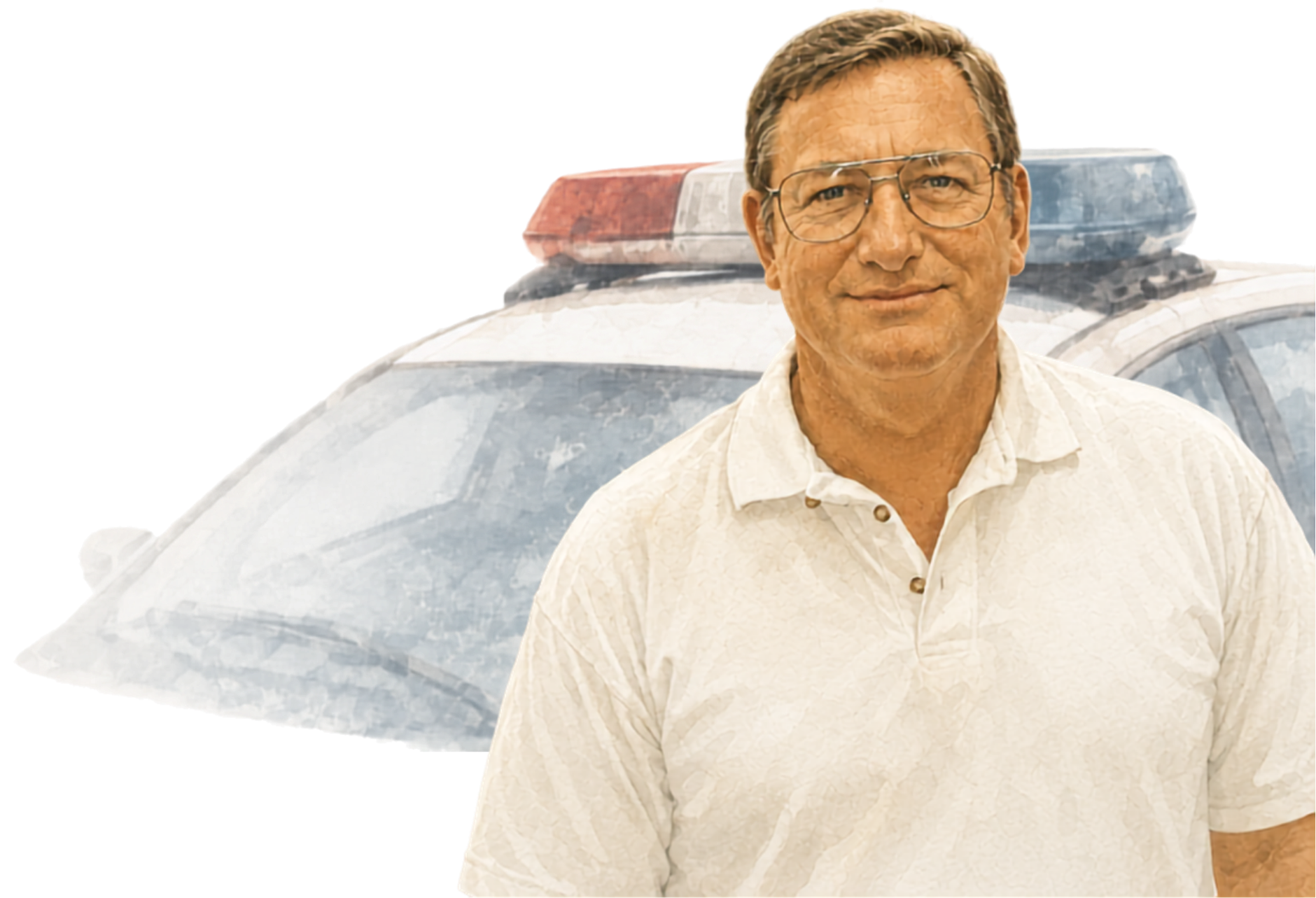
For a decade, Cooley served as the Officer-in-Charge of the LAPD’s Employee Assistance Unit — personally overseeing how the nation’s second-largest police department responded when one of its own was lost. In that role, he planned and conducted more than 80 police funerals and memorial services, including 21 line-of-duty deaths: 18 for the LAPD and three for neighboring California agencies.
He saw what worked. He also made mistakes — and he has never stopped thinking about them. In a field where every error is paid for by a grieving family or a department in crisis, those lessons became the most valuable thing he had to teach.
His core conviction: a police funeral is not merely a logistical event but a ceremony with the enormous potential to heal survivors and ennoble the law enforcement profession. That conviction — and everything it cost him to earn it — is what Aftermath exists to carry forward.
“A police funeral is not merely a logistical event but a ceremony with the enormous potential to heal survivors and ennoble the law enforcement profession.”— Sgt. John Cooley, LAPD (Ret.)
Watch & Listen
Scroll to explore all seven videos.
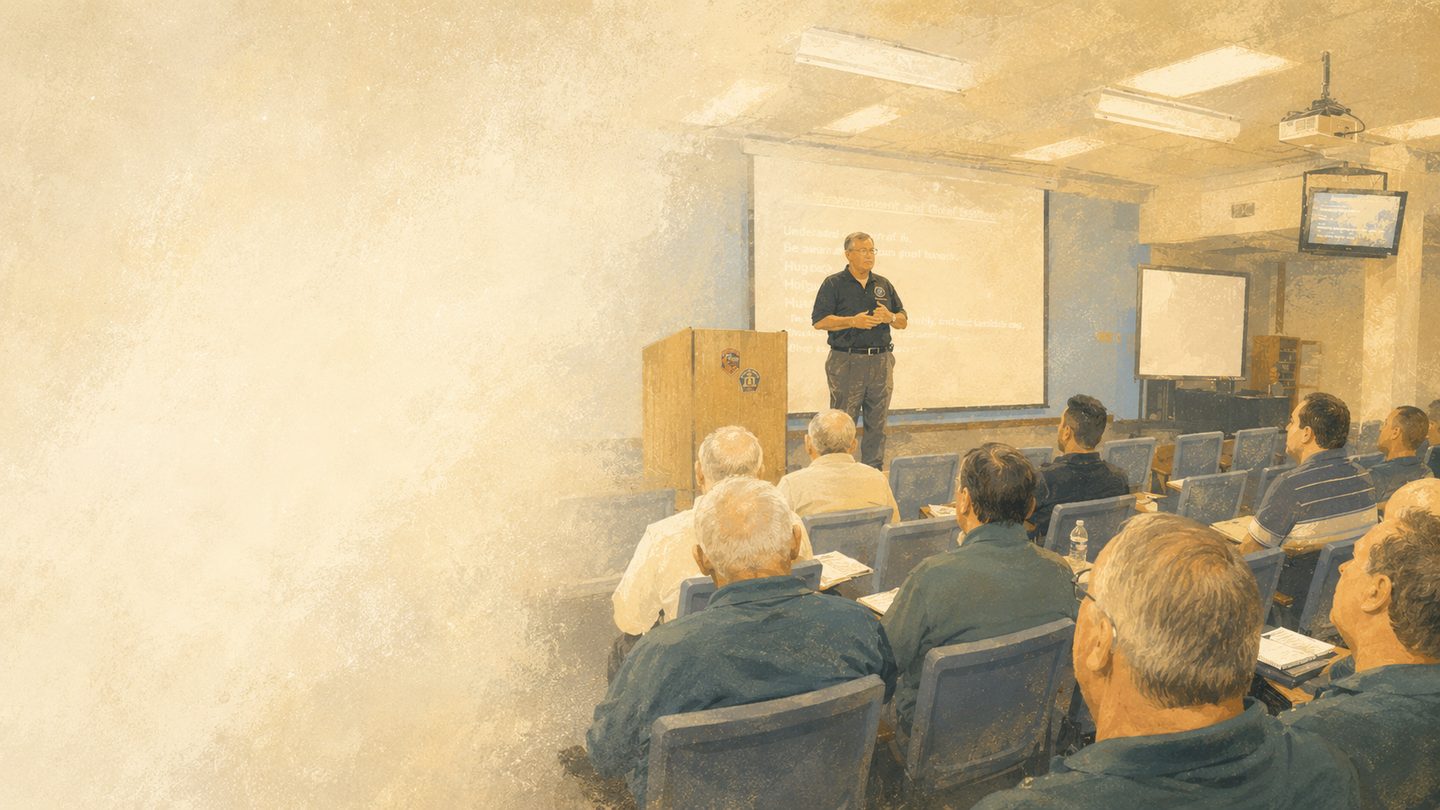
For years, Cooley traveled the country conducting seminars for chiefs, command staff, chaplains, and agency leaders — teaching what he had learned and, just as importantly, what had gone wrong. He covered the full scope: pre-planning, family care, death notification, funeral protocol, and departmental recovery. What the manuals leave out. What mistakes teach when manuals fail.
About This Project
Aftermath gathers everything Cooley knows — protocols tested over thirty years, lessons learned from what went wrong, and the guidance he gave at seminars across the country. It covers what to do, what to avoid, who to call, what to say, when to act, and when to stop and listen.
Available to any agency. Before the call comes.
Aftermath provides clarity when confusion can do lasting harm.
Who It Serves
Chiefs and command staff. Chaplains and peer support teams. Officers asked to lead when their agency loses one of its own — to line-of-duty death, suicide, trauma, or public loss.
His work covers six domains every department must address in advance: pre-planning, family care, death notification, funeral protocol, departmental trauma response, and the chaplain’s command role.
Cooley’s core teaching: the worst time to figure out what to do is when you are already in the middle of it. Aftermath gives every department the chance to know before they need to.
John Cooley · Illustrated readings
Nine readings on preparation, compassion, and the responsibilities that continue after the service. Drawn from John Cooley’s original writings.
A borrowed protocol can miss the structure, resources, and people of the department that must use it.
Read the article 1 min readThe first people told about an officer’s death need the same compassion we prepare to offer the family.
Read the article 2 min readKnowing a family’s private circumstances is a responsibility—not permission to share them.
Read the article 4 min readSecurity planning belongs in the funeral plan from the beginning.
Read the article 2 min readA useful protocol helps a coordinator find what matters when time and attention are scarce.
Read the article 3 min readDoing the tasks well is only part of serving the people who are grieving.
Read the article 3 min readPractical care begins when someone stops assuming that help is already on its way.
Read the article 5 min readA death outside the line of duty still leaves a family and a department needing support.
Read the article 3 min readAfter the service, review the work and remember the people who carried it.
Read the article 3 min readTen posts distilled from thirty years of field experience — the protocols, the hard lessons, and what every department must know before the call comes.
Ten Posts · Field-Tested Protocols · Policefunerals.com
Showing all 10 articles
John Cooley learned to distinguish arranging an event from serving the people inside it. The difference begins with listening and continues months and years after the burial.
Read article 3 min readTwo young officers needed something their sergeant never offered: permission to be human. The hardest calls don’t end when the shift does.
Read article 4 min readThe question is not how much can we do — but how much do we want to do. Real preparation demands more than a protocol on a shelf.
Read article 3 min readA police funeral is one of the most visible and vulnerable settings a department will ever manage. Security cannot be improvised the morning of the service.
Read article 3 min readAt his father’s funeral, a seventeen-year-old heard eulogies about a man he did not recognize. A quiet reckoning with what officers sometimes leave at the station.
Read article 5 min readA trash bag for personal property. A widow put on hold. Every procedure sends a message — the question is whether it is the one you meant.
Read article 4 min readJohn Cooley met families the evening before their appointment to explain the questions and decisions ahead. Preparation gave them room to think before anyone asked for an answer.
Read article 3 min readTen years and dozens of funerals, reduced to one principle: “If not me, who?” It is the difference between offering lip service and providing service.
Read article 5 min readA widow had to pay for her husband’s funeral herself — not because resources didn’t exist, but because no one on the planning team knew to ask.
Read article 3 min readEvery chief must decide what a retired officer’s service deserves — and that decision must be made before the phone call arrives. Protocol, not improvisation.
Read article 4 min read
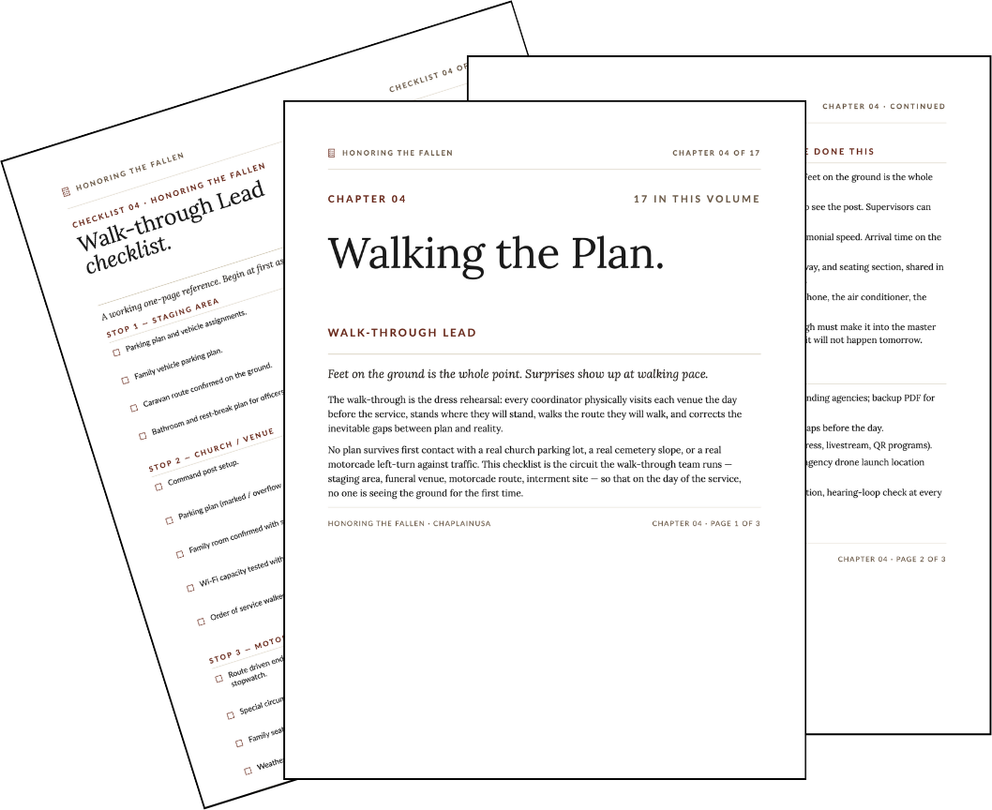
The Checklist – that humblest of quality-control devices is key in managing complicated, once in a lifetime events like a police funeral.
The equivalent to a pilot’s or surgeon’s checklist – a CRISIS CHECKLIST offers police leaders a lifetime of experience in ready to use checklist form.
Compiled by one of the nation’s foremost authorities on managing a police funeral, each checklist is designed to help police leaders master the myriad of decisions they face following a line of duty death.
“The volume and complexity of what we know has exceeded our individual ability to deliver its benefits correctly, safely, or reliably.”Atul Gawande, The Checklist Manifesto
The question John Cooley returned to in every planning meeting, every family notification, every funeral where something could go wrong and someone had to make sure it didn’t.
ChaplainUSA Blog