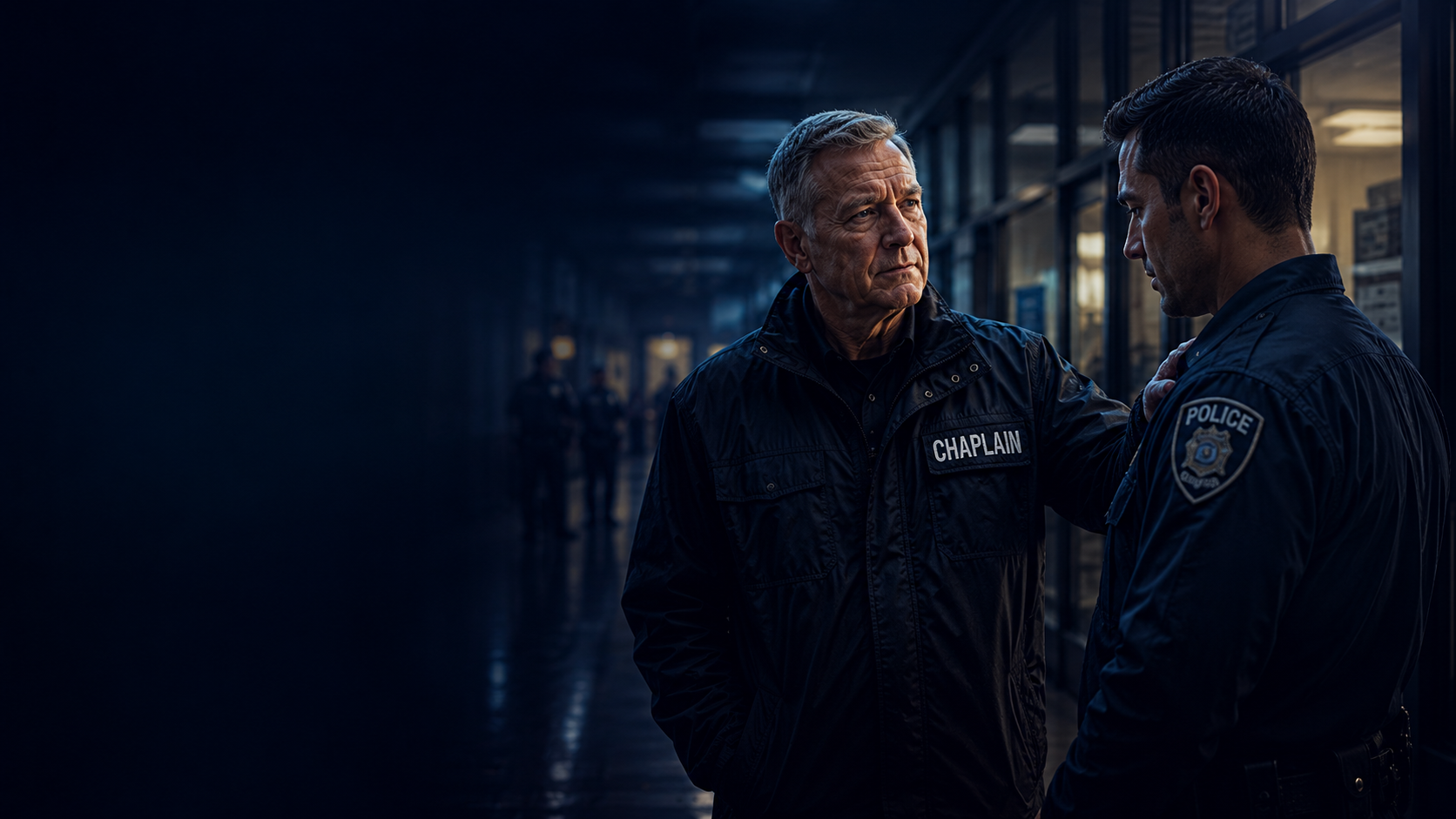
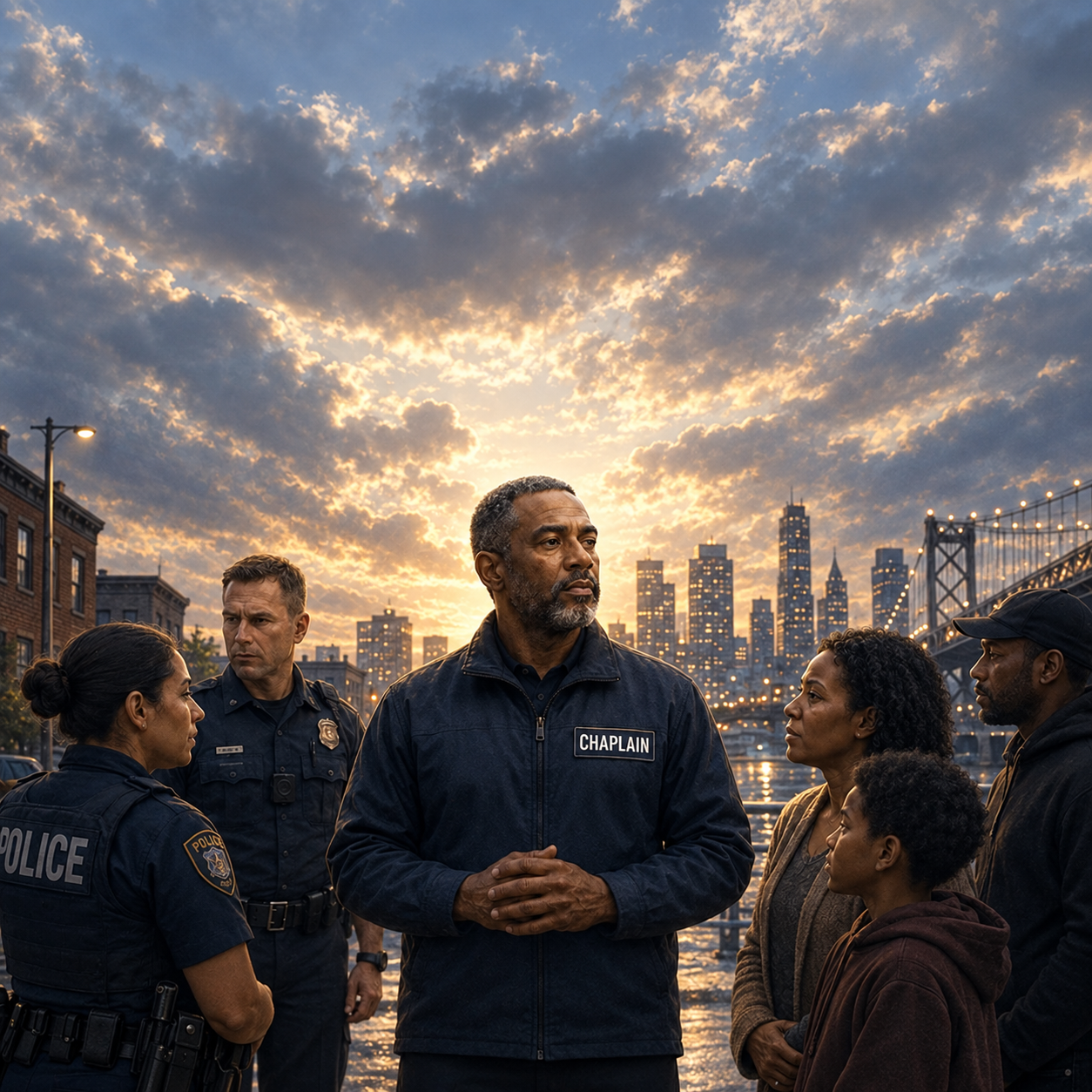
A room fills with grief after terrible news. Officers stand at the wall. A family is unraveling. The chief is carrying the department's strain. Then the chaplain arrives — and does not take over, does not rush to fill the silence. He reads the room, moves toward the person who needs steadiness, asks one practical question, and waits. Nothing has been fixed. But the room becomes less unstable.
A rare kind of authority
A steady anchor.
True gravitas is rare in modern life, but police chaplaincy stands out as a powerful exception. Today, gravitas isn't about formal titles or a stiff posture; it is the acquired ability to serve as a steady anchor when everything else is falling apart.
Influence without command
The weight of your character.
Chaplains model this nearly forgotten trait because they step directly into the intersection of human tragedy and intense stress without any traditional power.
You carry no weapon, possess no legal authority, and give no orders. Your influence relies entirely on the weight of your character.
Self-awareness in the field
Five things to notice about yourself.
Developing this presence requires sharp self-awareness. To build your own gravitas, monitor these five areas regarding how you carry yourself in the field:
01 · Attention
The “Slow Zoom” of your attention
When you walk into chaos, do your eyes dart around frantically, or do you practice a steady, slow zoom—calmly locking in on the person who needs you most while letting the background noise naturally fade?
Gravitas never hurries.
02 · Stillness
Your environmental micro-movements
Pay strict attention to your physical tells. Are you shifting your weight, fidgeting with your hands, or pacing?
True presence is physically still. Your subtle, unconscious movements signal to everyone else whether you are anxious or anchored.
03 · Silence
Your tolerance for silence
Check your urge to speak. When sitting with someone on the worst day of their life, do you rush to fill the quiet with small talk or clichés?
If silence makes you anxious, you are managing your own comfort, not theirs.
Gravitas can hold the quiet without flinching.
04 · Composure
Your internal thermometer
When a scene escalates and a citizen or an officer raises their voice, does your heart rate spike to match theirs?
A grounded chaplain brings the room’s temperature down to their level rather than letting the chaos pull them up to a state of panic.
05 · Presence
Your instinct to fix
Catch your desire to solve the problem. Are you trying to fix an unfixable tragedy just so you can feel useful, or are you strong enough to simply stand under the heavy weight of it with them?
Gravitas doesn't offer cheap answers; it offers a steadfast presence.
The field guide
Three disciplines of a trusted chaplain
Understand the Weight You Carry
I
Authority comes partly from role, but its lasting force comes from how you carry responsibility when nobody is watching.
Practice the Discipline of Presence
II
Composure, attention, pace, and restraint can be practiced until they become available in the moments that demand them.
Build the Record Behind the Presence
III
Gravitas grows through hundreds of ordinary acts: confidences kept, promises honored, preparation completed, and credit shared.
✦
A rule for the next difficult room
Arrive prepared. Listen longer. Speak plainly. Leave the room steadier than you found it.
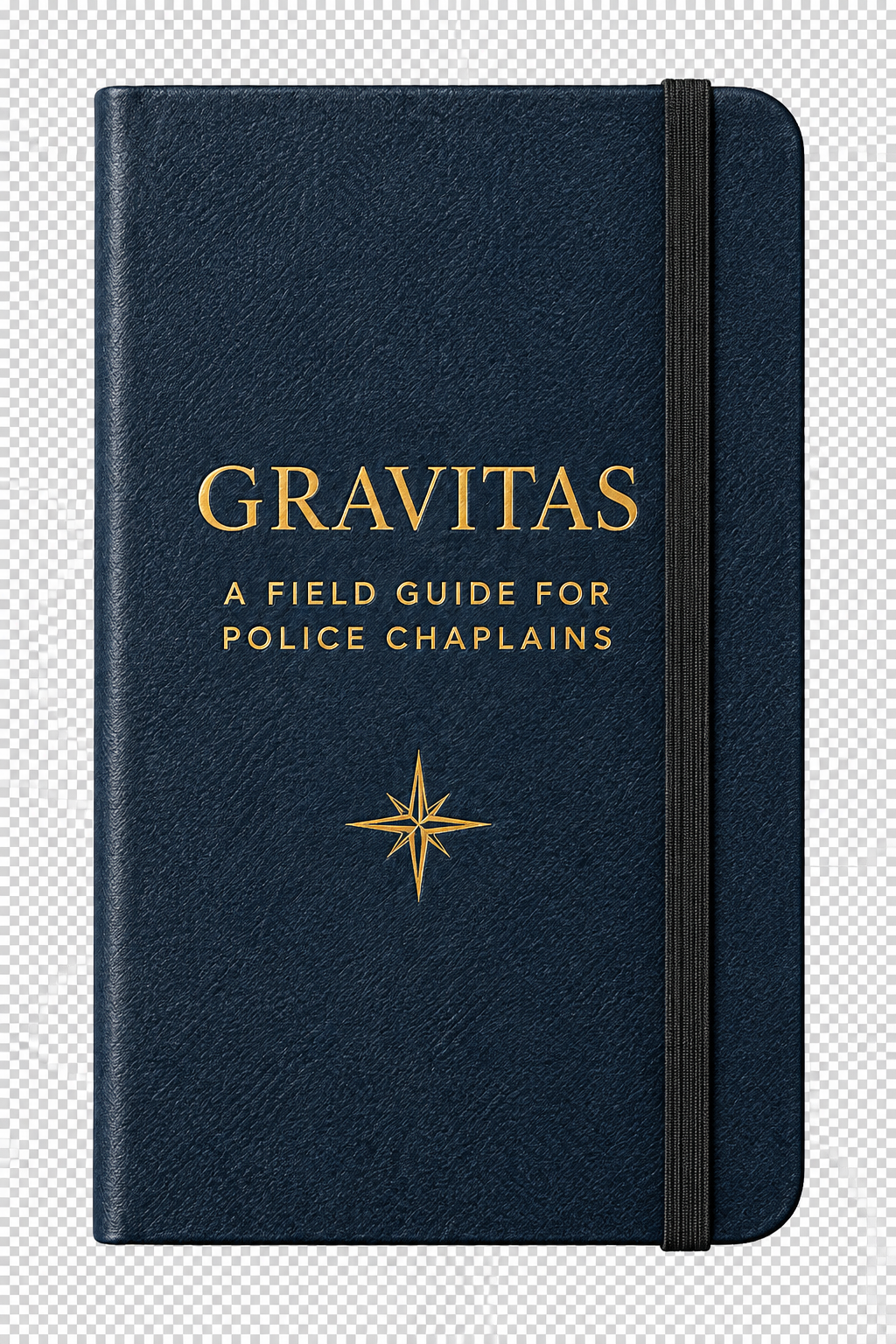
Nineteen short chapters on the presence, judgment, and daily habits that earn trust. Based on interviews from the Police Chaplain Project, this guide pairs practical reflection with thought experiments you can carry into your work.