
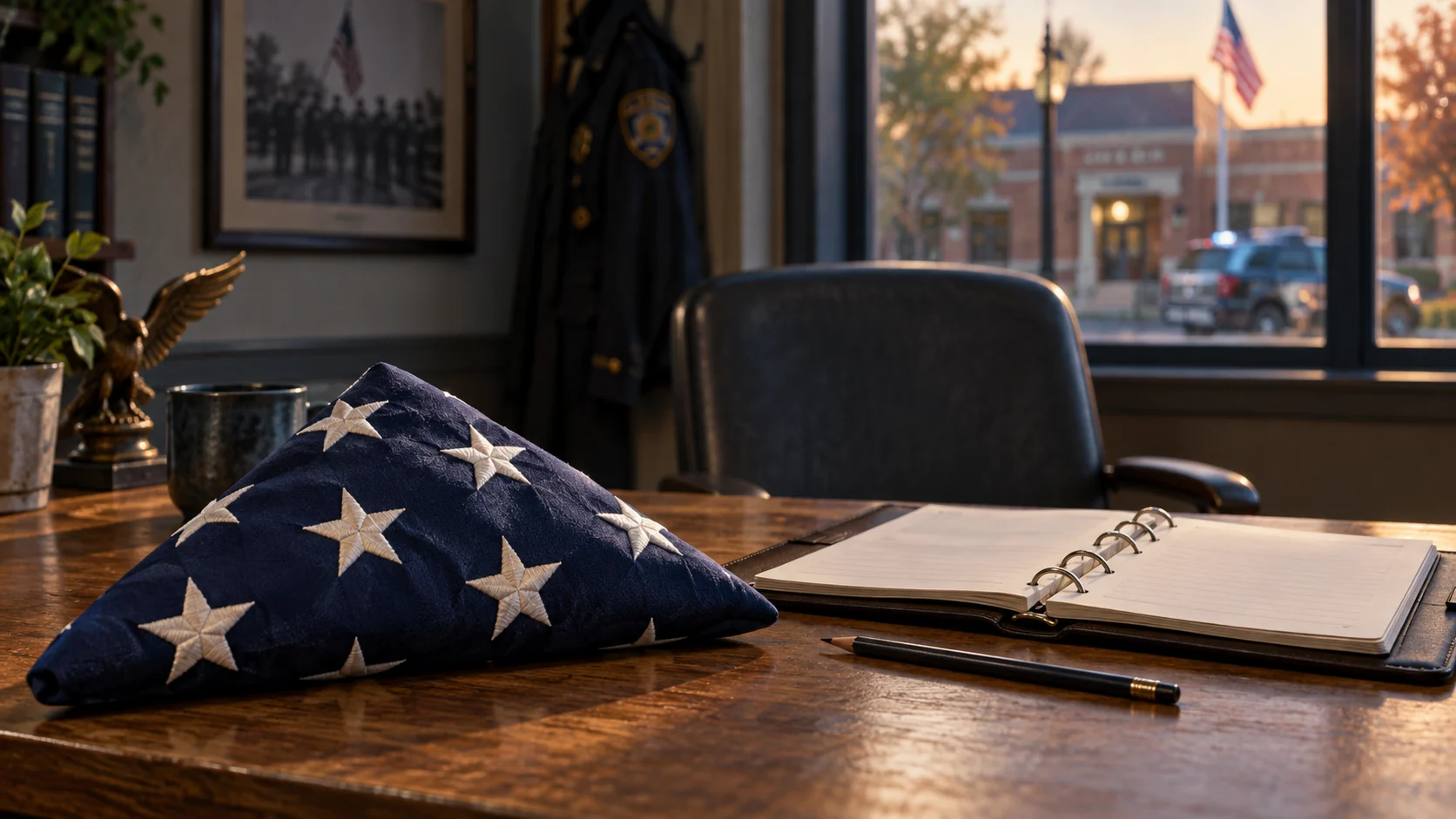
When an officer dies, a department cannot hand its responsibility to a funeral home and assume the rest will take care of itself.
A funeral director brings essential knowledge. So do the people who knew the officer, the family choosing how to say goodbye, and the agency responsible for its own personnel. A dignified service depends on those people working together. It begins with knowing who is responsible for what.
Prepare before grief writes the agenda.
At the moment of a death, ordinary questions can become difficult decisions. Who speaks with the family? Who coordinates visiting agencies? Who can authorize departmental resources? Who is keeping track of what the family actually requested?
Good intentions do not answer those questions. A written, reviewed plan gives people somewhere to begin. The Concerns of Police Survivors response resources include funeral planning and death-notification materials. Use established resources as a starting point, then make sure your own plan fits your agency, community and the family's wishes.
Honors should serve the people grieving.
A large turnout can express extraordinary love. It can also create decisions a family never expected to make. Before proposing a ceremony, ask what would be meaningful, what would be unwelcome, and who the family wants involved.
Give them a consistent contact. Explain choices in ordinary language. Keep a record of decisions so different teams do not repeatedly ask the same painful questions—or make conflicting promises. A chaplain can help listen, clarify and communicate without taking ownership of the family's goodbye.
Do not confuse partnership with abdication.
Invite the funeral director into planning early. Discuss the division of responsibilities, the practical limits of the venue and the needs of people attending. Coordinate with the appropriate agency leaders for any procession, security or ceremonial arrangements. Local rules and resources matter.
The test is not whether every element looks impressive. It is whether the family is heard, the responsibilities are clear and people can carry out their work without avoidable confusion.
Chaplains, bring the right people to the table.
Ask the chief to convene a planning conversation before a death occurs. Include the family liaison role, the funeral director, the ceremonial team and the people authorized to commit departmental resources. The chaplain can help make sure care for the family remains a specific responsibility throughout that plan.
- Name the department’s responsibilities. Assign contacts for visiting agencies, ceremonial arrangements, personnel support and continuing contact with the family. Record who can make decisions and who serves as backup.
- Agree on the partnership. Ask the funeral director to explain their responsibilities, venue constraints and coordination needs. Make clear where the department must provide its own people, decisions and resources.
- Give the family a voice. After a death, ask what the family wants before proposing honors. With permission, record its choices and share them with the responsible team so nobody has to repeat painful decisions.
- Plan beyond the service. Identify who will check in after visitors leave and how the chaplain, family liaison and department will stay connected.
The problem is a department stepping away from its duty, not civilians contributing their skill. Chaplains can help keep the department involved while protecting the family’s right to shape its goodbye.