
A police department can have an employee assistance program, a counseling contract, suicide-prevention training, peer support, wellness apps, a chaplain program, and a page on the intranet listing all of them.
And an officer can still sit alone in his truck after the worst call of his career with no idea whom he is willing to call.
That distance—between help existing and help being usable—may be one of the most important problems in officer wellness.
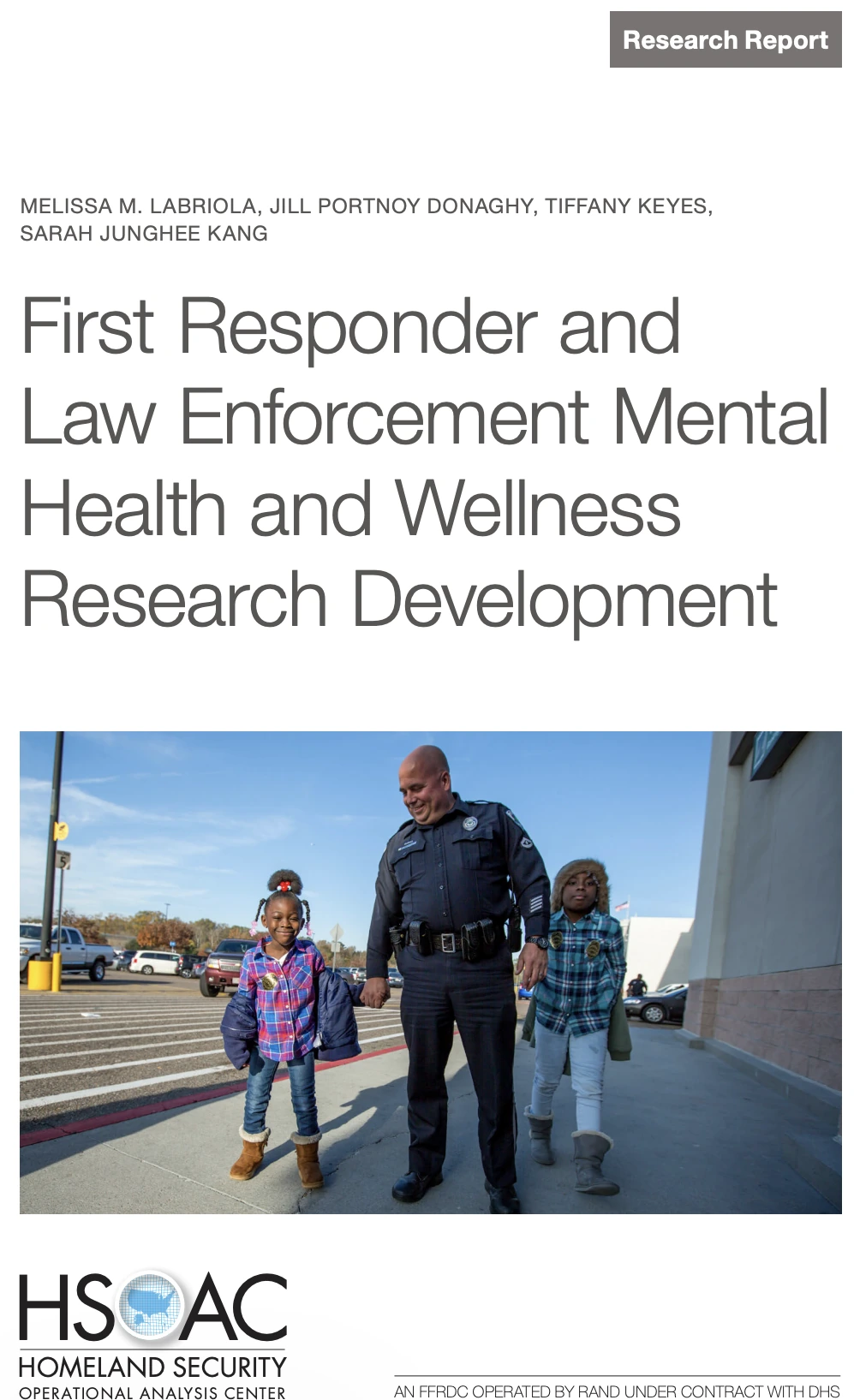
A major RAND study published in 2025 helps explain why.
Researchers examined mental-health and wellness programs used with law-enforcement officers and first responders. They looked at psychotherapy, resilience training, mindfulness, fitness, suicide prevention, critical-incident response, peer support, mentoring, and chaplain programs.
Buried inside more than 100 pages of research is a finding that deserves much more attention from police leaders and chaplains.
When RAND researchers looked for studies specifically examining law-enforcement chaplain programs, they found essentially an empty shelf.
That should get our attention.
We Have Built a Lot of Help. Officers Still Have to Be Willing to Use It.
RAND found that many of the obstacles to officer wellness have little to do with whether a program technically exists.
Officers may worry about confidentiality. They may fear that asking for help could affect their ability to carry a firearm or perform their duties. Some do not believe they have time to seek assistance. Some do not know what resources are available. Some work inside cultures where seeking help still carries a price.
Leadership support also matters. A program sitting quietly in the organizational chart is very different from one that officers believe their command staff genuinely supports.
This changes the question an agency should be asking.
The useful question is not simply, “What wellness programs do we offer?”
When one of our people is in trouble at 10:30 tonight, who will that person actually call?
That is a much harder question. It is also where the police chaplain becomes extremely interesting.
The Chaplain Occupies an Unusual Piece of Ground
A chaplain does not have to wait behind a desk for somebody to admit that he needs help. A good chaplain is already there.
At roll call. At the hospital. At the funeral. At the promotion ceremony. At the wreck. At the retirement party. At the terrible call nobody wants to discuss afterward.
Over time, that presence can create something difficult for an agency to manufacture through policy: familiarity.
The officer may never walk through the door marked mental health services. He may, however, talk with somebody he already knows.
RAND grouped chaplaincy with peer support and mentoring for a reason. Officers frequently turn first toward people inside their own circle when something begins to go wrong.
That creates an extraordinary opportunity. It also creates a responsibility.
A Name on the Chaplain Roster Does Very Little
The RAND researchers encountered chaplain programs of widely differing strength.
Some were substantial enough to include basic and advanced chaplain training, including additional suicide-prevention preparation. Others existed in a much thinner form.
One interviewee described a problem familiar to anyone who has spent time around volunteer programs: people sometimes like the idea of being a chaplain more than they understand the work required to become a useful one.
That distinction matters enormously.
A chaplain who rarely appears around officers cannot accumulate much trust. A chaplain who does not understand suicide, trauma, addiction, family crisis, grief, agency culture, or available community resources may be wonderfully compassionate and still be poorly equipped for the moment that eventually arrives.
Presence is part of the job. Preparation is part of the job. Knowing what to do next is part of the job.
The Research Gap Should Make Chaplaincy Better
RAND’s conclusion was cautious. The available research does not give us enough evidence to make sweeping claims about the effectiveness of police chaplain programs.
That restraint is important. Nobody should turn a thin evidence base into extravagant promises.
But the absence of research contains a message of its own.
Police chaplaincy has matured far enough that it deserves something more substantial than tradition, anecdote, and the assumption that everybody already knows what a good chaplain does.
We should be able to describe good police chaplaincy. We should be able to teach it. We should be able to identify the practices that make officers trust a chaplain. We should know what preparation a chaplain needs before entering a critical incident. We should understand when a chaplain should stay with someone and when the most important thing the chaplain can do is connect that person with somebody else.
And eventually, we should be able to study whether those practices work.
That is how a profession grows up.
This Is Where the Resource Guide Becomes Something Much Bigger
RAND identified another deceptively simple barrier to wellness: people sometimes do not know what help is available.
That has enormous implications for the police chaplain.
Imagine an officer finally deciding to tell a chaplain what is happening. His marriage is collapsing. His drinking has gotten worse. His son is in trouble. He has not slept properly in weeks. He is frightened by the thoughts going through his head.
The officer has already done the difficult part. He has opened the door.
What happens during the next ten minutes matters.
The chaplain cannot be expected to personally solve every problem sitting on the other side of that conversation. No one can. But the chaplain can know where the doors are.
That is the real potential of a Living Resource Guide. It is the accumulated answer to a very practical question:
Who can I call when this happens?
Not simply the name of a counseling center. The person who understands cops. The therapist who will answer. The treatment program that has actually helped somebody. The marriage counselor who understands shift work and police families. The financial adviser willing to sit down with an officer whose finances have gotten away from him. The addiction resource that can explain what happens next without frightening somebody away. The person to call when a family needs help tonight rather than three weeks from Thursday.
A strong chaplain does not need to possess every answer. A strong chaplain needs to know where answers live.
The Missing Infrastructure May Be Human
Law enforcement has spent years trying to improve officer wellness, and much of that work is worthwhile. But RAND’s report points toward something that is easy to overlook.
A wellness system succeeds or fails at the point where a human being decides whether it is safe to use it.
Confidentiality matters. Culture matters. Leadership matters. Availability matters. Trust matters. And relationships matter.
That puts the chaplain in an unusually important position.
The chaplain can become the familiar human doorway into a much larger network of care.
But only if the program is built deliberately. Only if the chaplain shows up before the crisis. Only if the chaplain knows the territory. Only if the agency treats chaplaincy as a serious professional function rather than another name on an organizational chart.
RAND found a research gap.
For police chaplaincy, it may also have identified an assignment.