

Grief: Proof That Love Has No Expiration Date
We have been trained to think of grief as a malfunction. A problem to be fixed. Something you move through on your way to being okay again. Stages. Timelines. Getting closure. We even say we "lost" someone, as if they were a set of keys we might someday find.
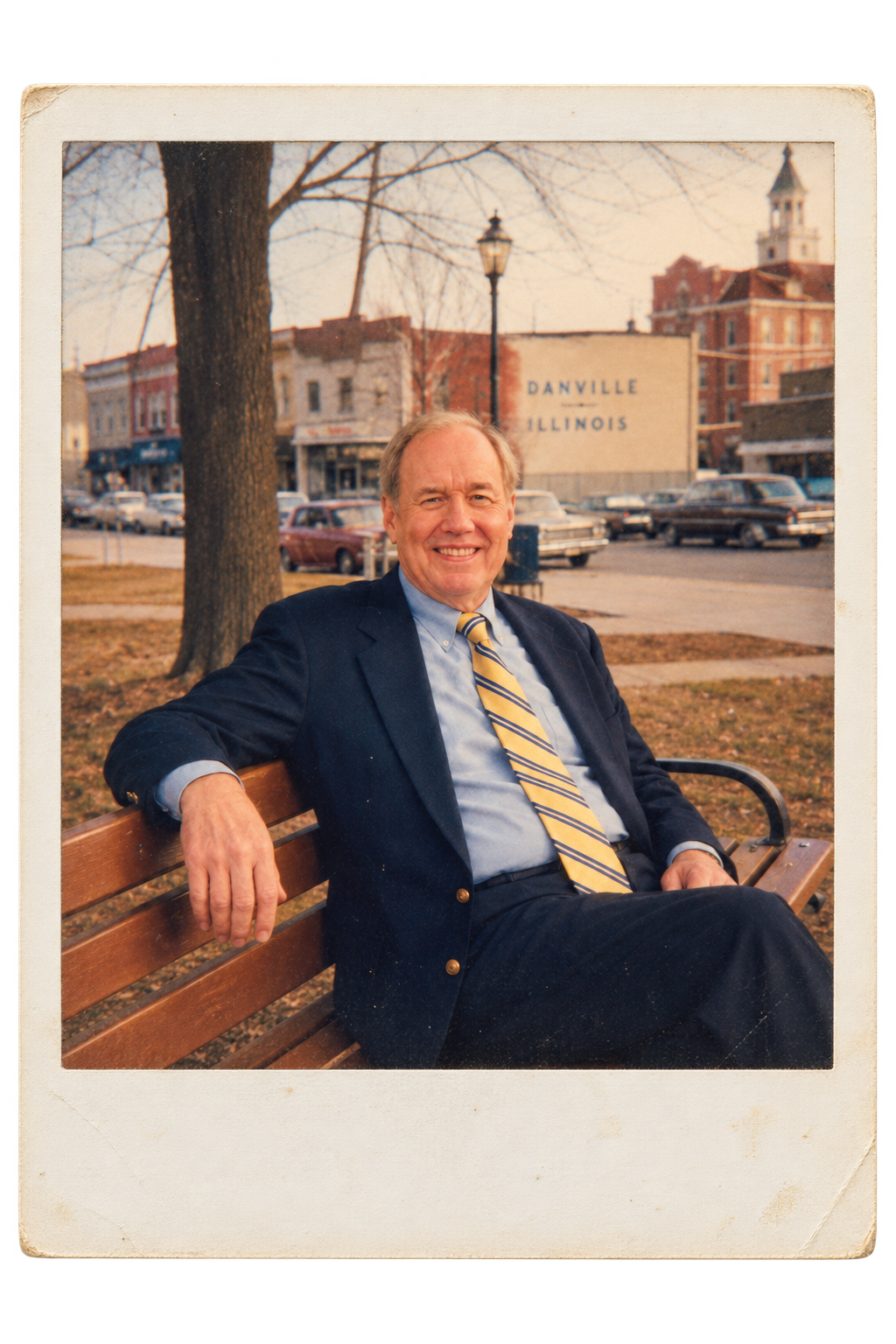
Bob Jones had a different definition.
Grief, he said, is not the opposite of love. It is love — love with nowhere to go right now. The ache you feel is proportional to the gift that person was. You don't grieve strangers. You grieve the irreplaceable.
Bob spent decades walking into the rooms where grief lives — hospitals, crime scenes, living rooms where the casseroles stack up and nobody knows what to say. He sat with parents who had lost children and with children who had lost parents and with first responders who had lost colleagues in ways that could not be spoken out loud over dinner.
He noticed something every time. The people who were most broken open were also, often, the ones with the most capacity to be present to others in their pain. As if the wound had made room.
He used to say: "The cracks are where the light gets in." Not because breaking is good, but because wholeness was never really the goal. Being real was the goal.
Our culture tells us that grief is a phase. That it has a shelf life. That at some point, you should be over it. The clinical world has tried to be helpful by giving us a map — denial, anger, bargaining, depression, acceptance — but Bob was careful to remind people that a map is not the territory. Your grief will not follow a predictable route.
What the research actually tells us, and what Bob witnessed every day, is that grief doesn't end. It transforms. The acute agony of early loss slowly, slowly becomes something more like a scar — still there, still part of you, but no longer an open wound. You carry the person differently. They become part of how you see.
In the Christian tradition Bob loved, death is never the last word. The resurrection isn't a denial of grief — it holds grief inside a larger story. "Do not be afraid" is the most repeated command in Scripture, and Bob believed it was offered precisely because grief is terrifying. The promise isn't that you won't feel it. The promise is that you won't feel it alone.
Allow yourself to grieve specifically. Not grief in general, but this person, this laugh, this particular way they said your name. Name what you miss. Write it down if that helps. Specificity is a form of honor.
Tell someone one story about the person you lost. Not a eulogy — a moment. The ordinary kind. The one that made you love them before you knew you loved them.
And if someone you know is grieving, resist the urge to fix it. Just stay in the room. Say: I loved them too. Or simply: I'm here. Bob always said that presence is the most powerful intervention we have. We don't need the right words. We just need to not leave.
Grief is not a sign that you did something wrong. It is a sign that you did something right — that you let someone in far enough to matter. The love that causes grief is the same love that carries you forward.
You are not broken. You are open.
Bob ended every letter, every session, every goodbye with the same words: Fair winds and following seas. I'll be seeing you.
— A reflection on the life and work of Robert Kenneth Jones (1950–2020).
Bob Jones spent more than four decades quietly innovating in the treatment of addiction and the wounds of childhood abuse. The Next Right Thing continues his archive of recovery, resilience, and faith.