
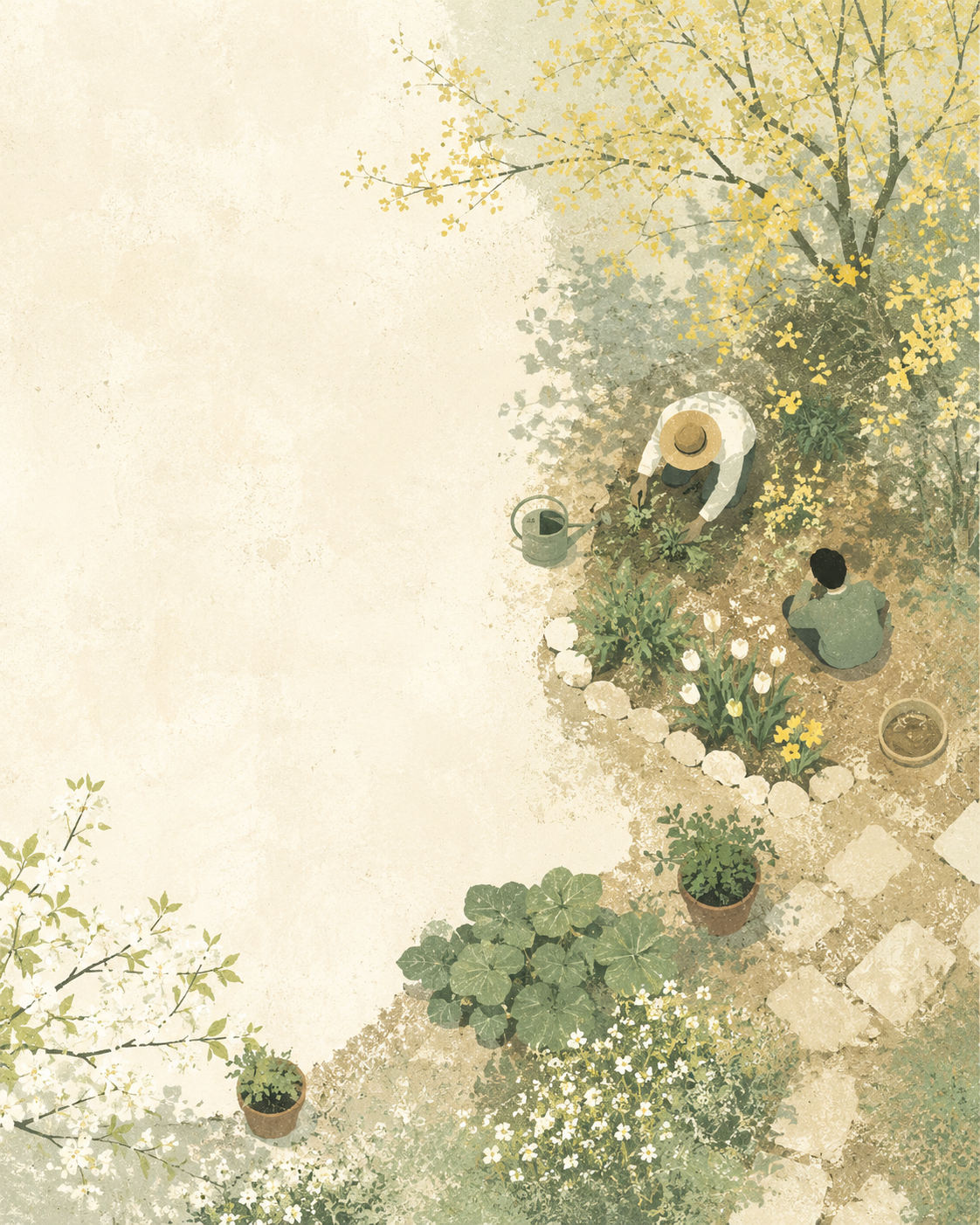
A Garden in April
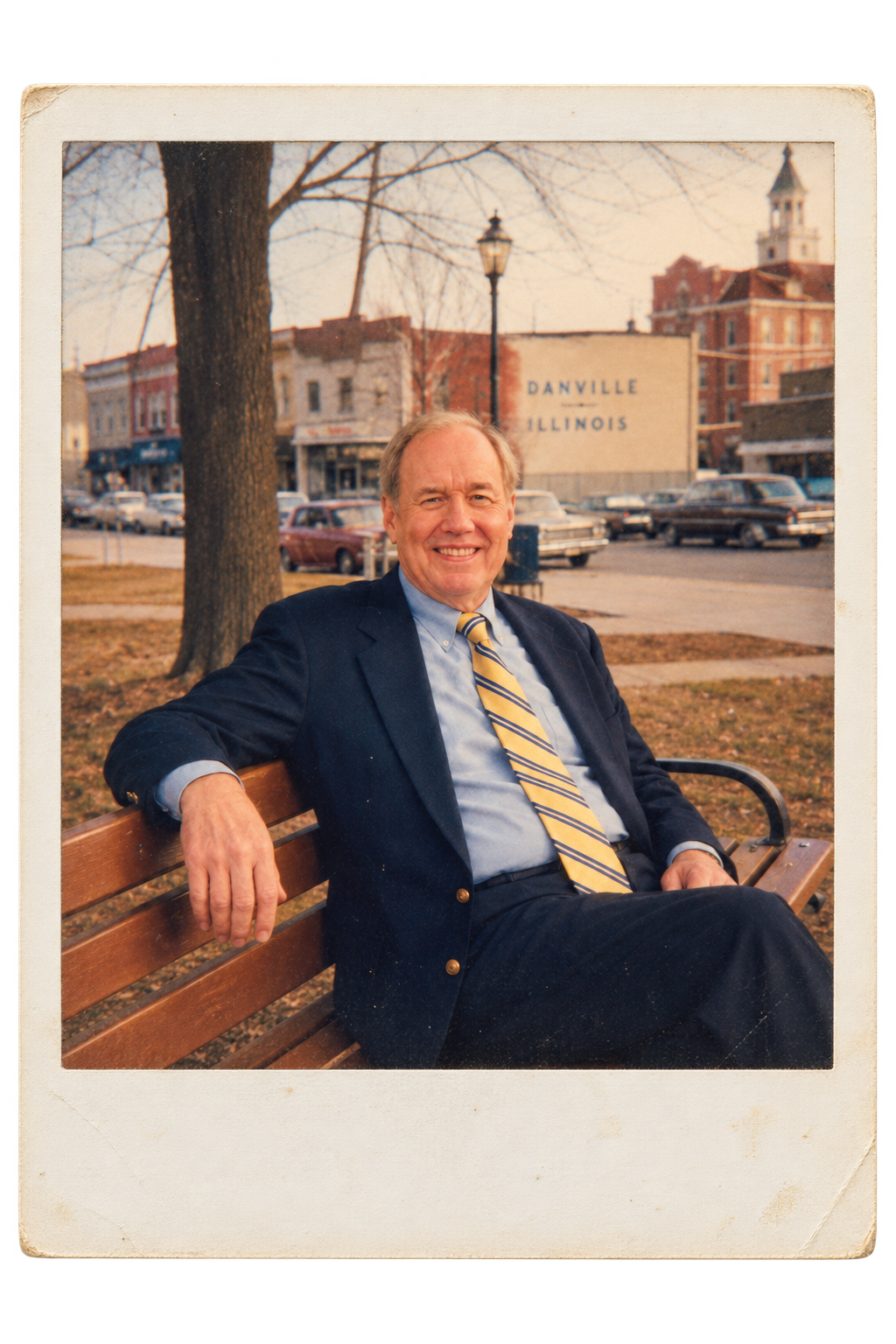
Bob's grandfather Roy Jones had a garden that Bob returned to, in memory, for fifty years.
He grew peonies. Great, heavy-headed peonies that bloomed every April in the backyard of the house in Ohio — extravagant and brief, gone before you fully accepted they were there. He tended them the way he tended everything: with patience, without hurry, with a quality of attention Bob did not understand until he was grown.
Bob was eight or nine when his grandfather first took him out there and showed him what he was doing. He wasn't explaining the peonies so much as introducing Bob to them. He knew their names — not the Latin names, but names he had given them. He knew which ones came back strongest after a hard winter. He knew, with a precision that seemed to Bob almost prophetic, exactly which day in April they would arrive.
He said something in that garden that Bob never forgot: "Bob, if you want to know whether God is paying attention, come out here in April."
Bob took him at his word. He always did.
What the Garden Teaches
There is a recurring argument in the literature of the soul between those who find God in extraordinary events — the burning bush, the resurrection, the dramatic encounter on the road — and those who find God in the recurring, the ordinary, the cycle that requires no miracle because it is itself the miracle.
Roy Jones was in the second camp. He was not a man of many words or elaborate theology. But he understood, with a certainty Bob spent his entire career trying to articulate, that the sacred is embedded in the natural order. That the return of peonies in April is not a backdrop to spiritual life but an instance of it.
The poet Gerard Manley Hopkins called this inscape — the distinctive inner pattern of a thing, the quality that makes this peony this peony and not any other. He believed that attention to particulars — real attention, the kind that slows down and sees — was a spiritual act. That paying close notice to the world was a form of encountering the one who made it.
Bob believed this too. He learned it in a garden in Ohio, from a man who knew the names of his flowers.
The garden also teaches what Bob's grandfather called faithful return. The peony does not bloom because conditions are perfect. It blooms because returning is what it does. Year after year, through hard winters and wet springs, through the death of the gardener and the arrival of whoever tends the ground next, it comes back. The faithfulness is built in. The return is the nature of the thing.
Bob thought about that faithfulness in the harder seasons of his life — the ones where he was not sure he had it in him to come back one more time. The garden said: you do. The return is built into you too.
How to Pay Attention
Go outside. If you can, go to a garden. If not, go anywhere that is growing.
Then slow down. Most of us move through the natural world at the speed of everything else we do, which means we do not actually see it. We see the category — tree, flower, cloud — without seeing the thing itself.
Try to see one particular thing. The way the light is landing on this flower at this moment. The specific shade of green on these particular leaves. What is coming up through the crack in this sidewalk, and how long it must have been trying.
That quality of attention — unhurried, specific, genuinely curious about a single thing — is the posture of prayer. You may not call it that. Roy Jones didn't use the word much either.
But that is what it is.
And if you are the kind of person who finds it easier to pray in a garden than in a sanctuary, know this: the tradition is on your side. From the psalms to the mystics to Hopkins to the old man in Ohio who named his peonies — you are in good company. The garden has always been a place where what is true about the world becomes briefly, undeniably visible.
Go there. Let it do what it does.
April keeps coming. The peonies keep returning. The garden Bob's grandfather kept has been someone else's for forty years now, and those flowers are surely still arriving on the same day, doing in April what they have always done.
What is faithful does not need our attention to remain faithful. But we need it. We need the faithfulness of returning things to remember that we belong to something that keeps arriving, keeps offering itself, keeps coming back in spite of everything.
Go to the garden. Stand in it for a few minutes longer than you planned.
God has been there all morning, waiting for you to arrive.
Bob ended every letter, every session, every goodbye with the same words: Fair winds and following seas. I'll be seeing you.
— A reflection on the life and work of Robert Kenneth Jones (1950–2020).
Bob Jones spent more than four decades quietly innovating in the treatment of addiction and the wounds of childhood abuse. The Next Right Thing continues his archive of recovery, resilience, and faith.