A Prison Visiting Room
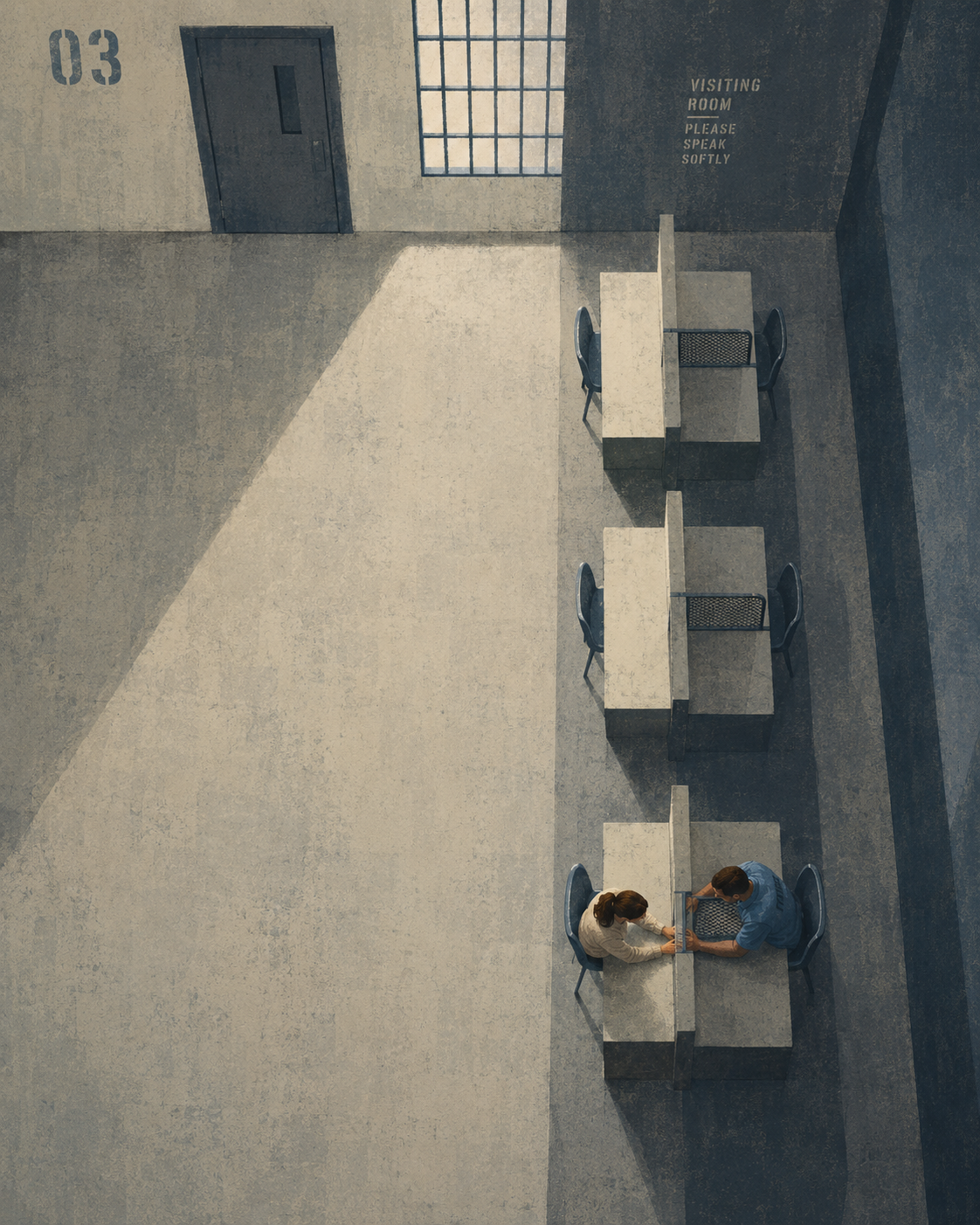
The visiting room is designed to communicate a message. The plastic chairs bolted to the floor. The plexiglass between the table and the window. The corrections officer at the door. The clock that everyone in the room is watching. The message the room sends is: this is not ordinary life. The person you are here to see has been separated from ordinary life as a consequence of what they did.
Bob spent enough years in those rooms to know the message they send. And to know something else: the love sitting across that table is not paying attention to any of it.
He watched mothers come to those rooms who had driven three hours each way on a Saturday to sit for one hour. He watched a father — who had not said a word to his son in fifteen years before the arrest — come every week without missing one. He watched a woman hold her husband's hand through a slot in a partition and talk to him about nothing: the grandchildren, the garden, what she made for dinner on Tuesday. Ordinary conversation, offered with the quality of attention you would bring to something sacred.
The room was saying: this relationship is interrupted. The love was saying: I don't think so.
What the Wall Cannot Do
There is a passage in Paul's letter to the Romans that Bob thought about in visiting rooms for thirty years. He lists everything that might try to separate us from the love of God — death, life, angels, rulers, things present, things to come, height, depth, and "anything else in all creation." The list is notably complete. He is not leaving loopholes.
Bob took that to mean the list also includes: visiting room hours, corrections policies, the distance between a rural facility and wherever you live, the mistakes that led to the sentence, the shame that makes some families stop coming.
None of it, Paul says, can actually do the thing it's trying to do. Love is not that fragile.
What Bob saw in visiting rooms confirms this. The love that shows up at 9am on a Saturday after a three-hour drive is not ordinary love. It is a love that has already been tested and has refused to yield. It has had to decide, probably more than once, whether to keep going. And it decided yes. What he witnessed in those rooms was the living proof that love can persist through conditions that would reasonably justify its giving up.
The sacred does not stay on one side of the plexiglass. It fills the room.
The Lesson for All of Us
Most of us will never sit in a visiting room. But all of us will face some version of its architecture — a barrier the world has placed between us and someone we love, or between us and a version of ourselves we can't find the way back to. An estrangement. A diagnosis. A failure we don't know how to recover from. The distance of years without honest conversation.
The visiting-room question — the one Bob saw those mothers and fathers and wives and children answer every week — is not: can this be fixed? The question is: will I show up?
Because showing up is itself the answer. The relationship is kept alive by the act of going. The love is maintained by the maintenance of it — the drive, the parking lot, the security line, the forty-five minutes of talking about dinner on Tuesday. All of that ordinary effort is the love, expressed.
Keep showing up. Even when the conversation is hard and the hour is short and the room is not what you hoped. The showing up is the message. And the message, received in a place designed to say the opposite, is everything.
Bob never walked into a visiting room without sensing that something sacred was already there before him. Something that chose, long before he arrived, not to be kept out.
You cannot build a wall that love cannot find its way around.
Go anyway. The trip is the love.
Bob ended every letter, every session, every goodbye with the same words: Fair winds and following seas. I'll be seeing you.
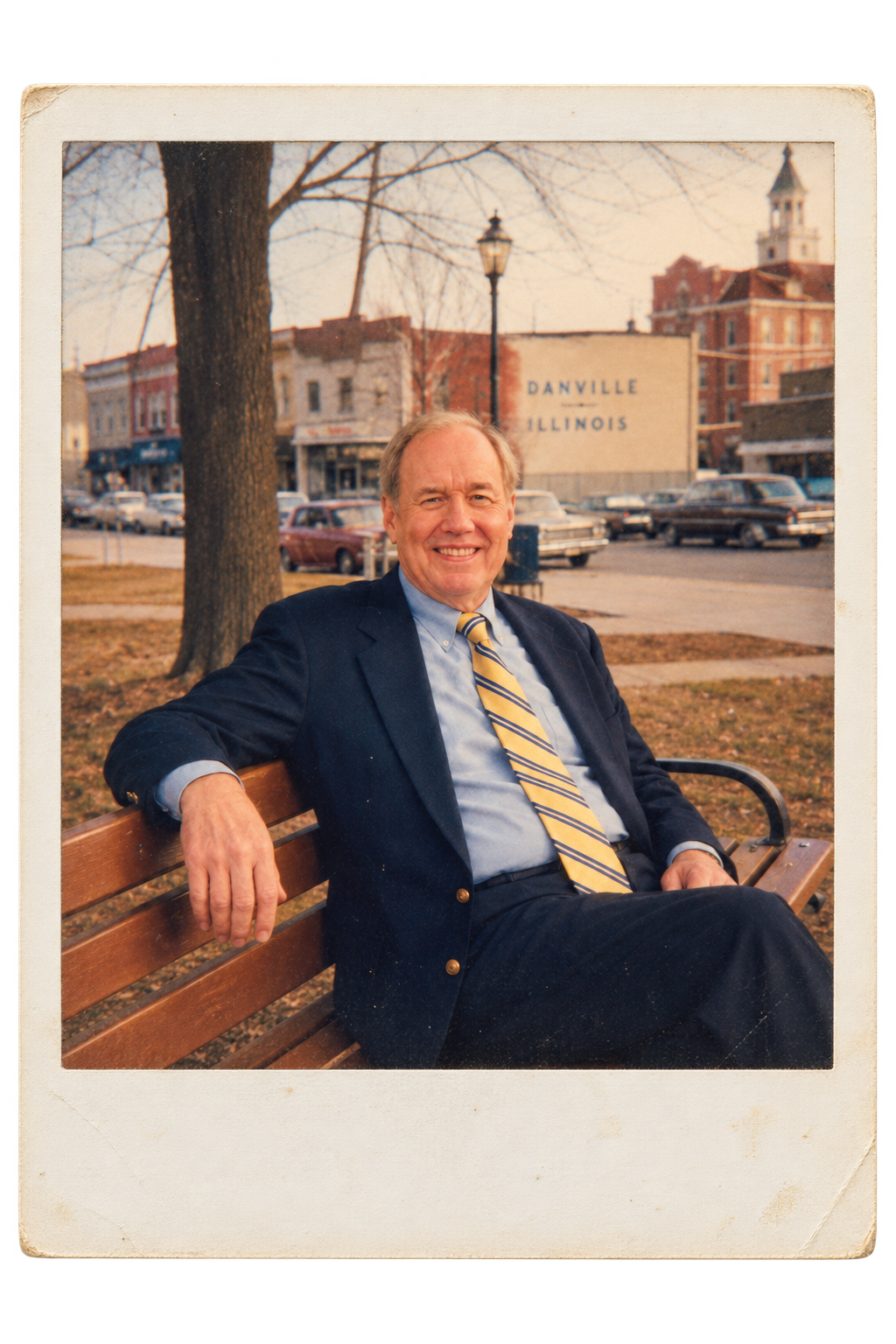
— A reflection on the life and work of Robert Kenneth Jones (1950–2020).
Bob Jones spent more than four decades quietly innovating in the treatment of addiction and the wounds of childhood abuse. The Next Right Thing continues his archive of recovery, resilience, and faith.