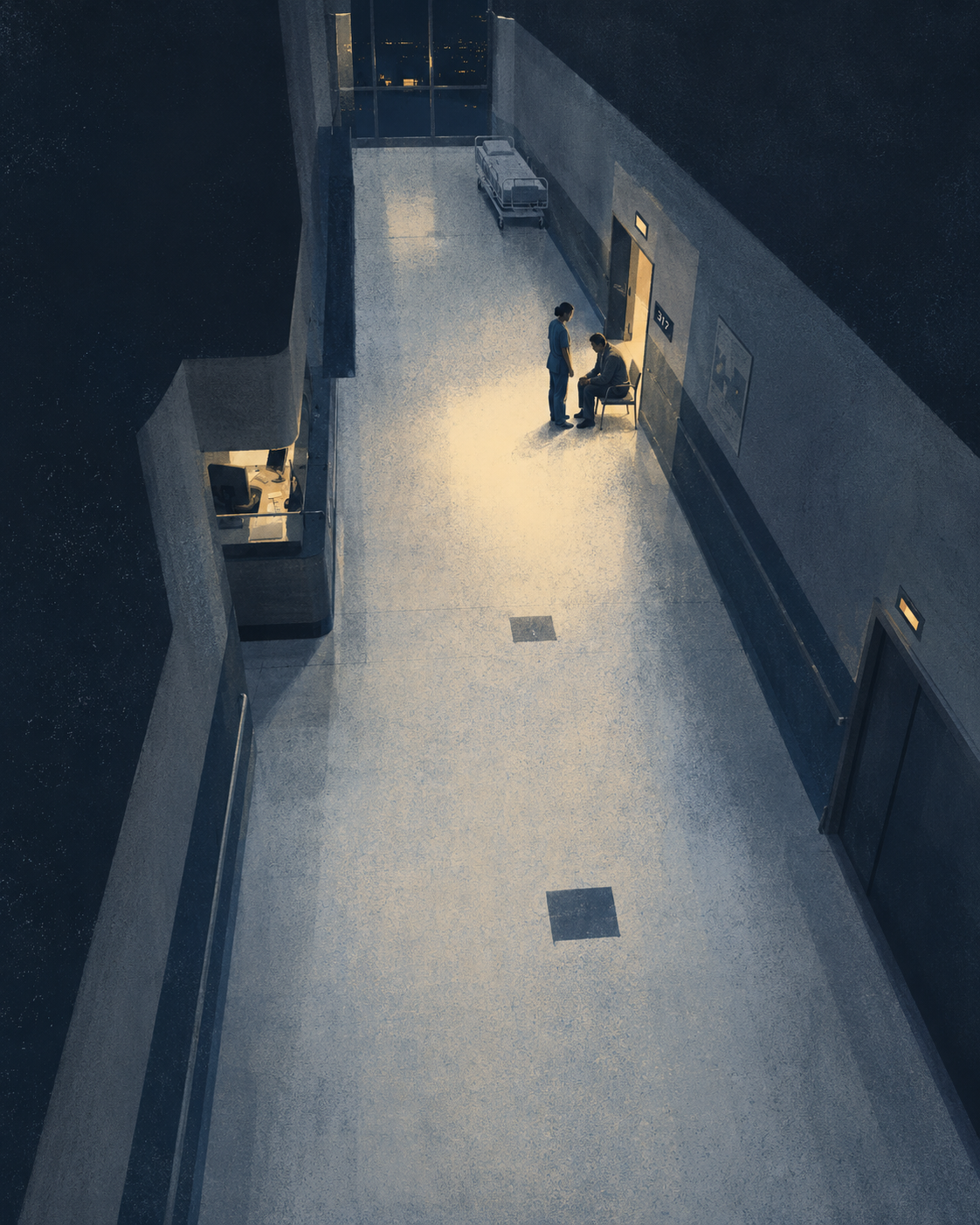
A Hospital Corridor at Three in the Morning
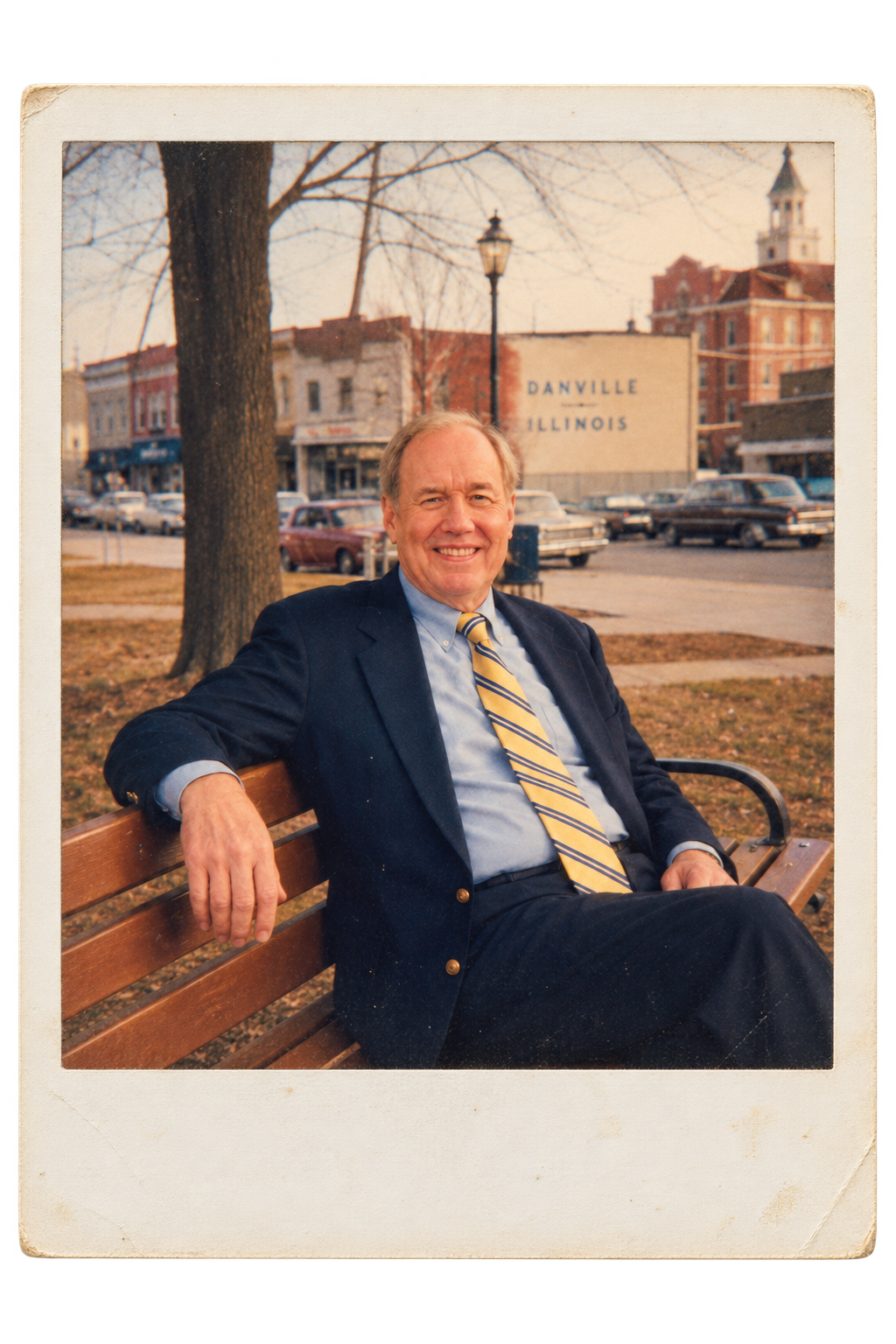
Bob learned to love this hour. Not immediately — the first hundred times he walked a hospital corridor at 3am, he was exhausted and inadequate and wishing he were somewhere else. But somewhere in the years of showing up to those corridors, he learned what they actually were.
The corridor at three in the morning was the closest thing he ever found to a sanctuary. Not because it is quiet — sometimes it isn't. But because the performance has stopped. No one walking a hospital corridor at three in the morning is pretending. The mask has come off. The armor is somewhere in a waiting room chair. What is left is just the person, stripped of everything except what actually matters.
What the Hour Does
There is a concept from the Celtic tradition Bob kept returning to: thin places. The phrase describes locations where the boundary between the sacred and the ordinary becomes permeable — where you can almost see through the fabric of everyday life to something that was there all along.
Hospital corridors at three in the morning are thin places. Not because of anything special about the linoleum or the fluorescent lights. Because of who is there, and why. The mother who hasn't slept. The son who drove four hours in the dark. The nurse who has been on since seven and will be on until seven again, doing ordinary things extraordinarily well.
What Bob learned is that God does not wait for conditions to be ideal. God shows up exactly where the need is greatest — which is not the sanctuary, not the retreat center, not the places we set aside for sacred encounter. It is the corridor. The waiting room. The chair you have been sitting in for eight hours.
The great mystics understood this. Thomas Merton wrote that the spiritual life is not a movement toward God so much as a recognition that God has been here the whole time. What the corridor strips away — the performance, the schedule, the ability to pretend things are fine — is exactly what makes that recognition possible.
At three in the morning, in a hospital corridor, people are not fine. And in that honest place, something opens.
What to Do There
If you find yourself in a hospital corridor at any hour, here is what Bob would offer you:
Don't rush to fill the silence. The silence in those places is not empty. It is full of something, and if you slow down long enough to feel it, you will know that you are not as alone as you thought.
Ask the second question. The first question — "how are you holding up?" — matters, but the second question is where the real conversation begins. What do you need right now? What are you most afraid of? Is there someone I can call? Those second questions, asked simply and without agenda, are acts of ministry anyone can perform.
And let yourself be moved. Do not protect yourself from what is happening in those corridors. The grief is real, and your willingness to be touched by it is not weakness. It is the thing that makes you useful.
One more thing: if you are the one who is there because the work requires it — the nurse, the chaplain, the aide — remember that you are not just doing a job. You are standing in a place where the ordinary boundaries have come down, and your steady, competent, caring presence is itself a form of grace. Don't underestimate what it means that you showed up.
You may not have chosen to be in that corridor. You may be there because the world brought you to a threshold you did not ask for. That is all right.
The wrong place does not exist. God has been in that corridor longer than you have. And the thing you are afraid to feel — the sorrow, the helplessness, the love that doesn't know what to do with itself — is not an obstacle to the sacred.
It is where the sacred lives.
Bob ended every letter, every session, every goodbye with the same words: Fair winds and following seas. I'll be seeing you.
— A reflection on the life and work of Robert Kenneth Jones (1950–2020).
Bob Jones spent more than four decades quietly innovating in the treatment of addiction and the wounds of childhood abuse. The Next Right Thing continues his archive of recovery, resilience, and faith.