Thanksgiving: The Practice of Noticing What Didn't Leave
We have turned Thanksgiving into a performance of abundance. The table has to be full, the family has to be present, the feeling has to match the calendar. We conflate gratitude with contentment — as if you can only be thankful when things are going well, and when things aren't, the holiday becomes a kind of accusation.
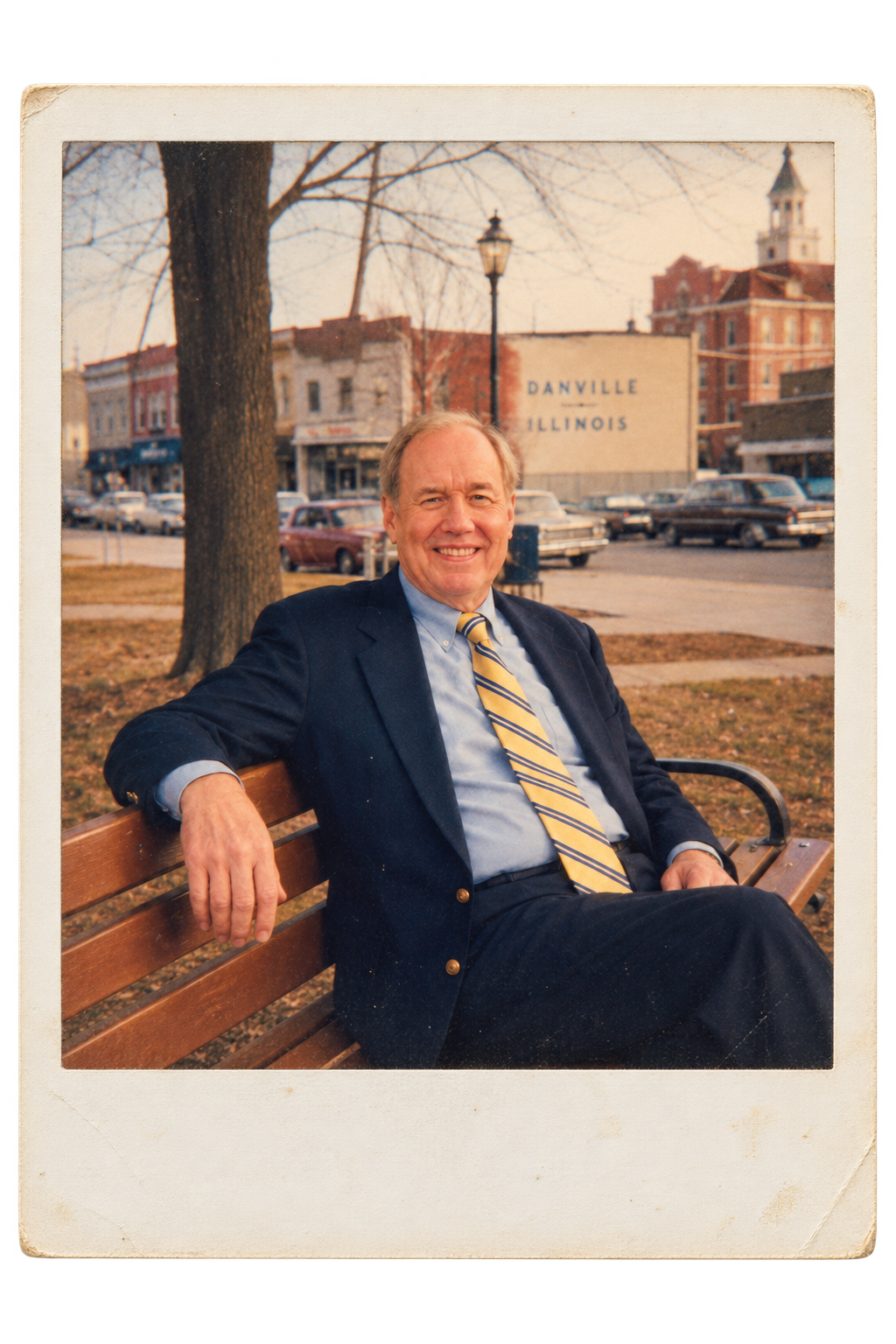
Bob Jones had a different definition.
Gratitude, he believed, is not a response to good circumstances. It is a discipline — one practiced most powerfully, and most honestly, in the middle of hard times. It is the radical act of noticing what didn't leave when everything else did. What remains. What has quietly held.
That is not a small thing. That is, in fact, everything.
Bob's father Ken had a way of making a point you never forgot. Once, during a time of scarcity when money was genuinely tight, Ken drove to the store and filled a shopping cart to overflowing with paper towels. Just paper towels. Stack after stack, until the cart couldn't hold any more.
His point was simple and stubborn: scarcity is mostly man-made. The story of not-enough is usually a story we have told ourselves so many times it started to feel like news. Most of us — not all, but most — have more than the worst day makes us believe.
Bob told that story not as a dismissal of real suffering, but as an invitation to look again. To see through the scarcity story and find, underneath it, something that has been there all along.
The clinical research on gratitude is among the most consistent findings in positive psychology: people who practice intentional, specific gratitude — not vague thankfulness but named, particular noticing — show measurable improvements in mental health, resilience, and even physical wellbeing. The grateful brain, it turns out, is structurally different from the anxious one.
But Bob was quick to point out the word that matters in that sentence: practice. Gratitude is not a feeling that arrives when circumstances cooperate. It is a muscle. You build it by using it, especially when using it is hard.
The Psalms — which Bob read faithfully — are full of this paradox. Many of the most beautiful songs of thanksgiving were written by people in exile, in fear, in grief. The ancient Hebrew poets didn't wait until the storm passed to sing. They sang in the storm, not because they were unafraid, but because they had decided that the storm was not the whole story.
That is the faith Bob carried: not that everything is fine, but that everything eventually gives way to Wonderful. Gratitude is how you hold onto that conviction on the days when Wonderful feels very far away.
This Thanksgiving, resist the pressure to perform abundance. Instead, try this: name three things that did not leave. Not the things you're happy about — the things that stayed. A friendship that survived a hard year. A faith that bent but didn't break. Your own stubborn persistence in the face of something that tried to undo you.
Write them down. Specificity matters. Not "I'm grateful for my family" but "I'm grateful that my daughter called on Tuesday when she didn't have to."
Then, if you're at a table with others, invite one person to share one specific thing. Not a speech — one sentence. You will be surprised what gets said when the door is opened that way.
And if this particular Thanksgiving is a hard one — if the table is smaller than it was, or the absence of someone is louder than the presence of everyone else — know this: grief at Thanksgiving is not ingratitude. It is love, doing what love does when it misses someone. Both can be true at once.
You are not required to feel thankful for everything. You are invited, simply, to notice what remains — the small and unearned mercies that kept showing up even in the months you were sure they wouldn't.
That noticing is itself an act of faith. And faith, in Bob's experience, has a way of finding you more to be grateful for.
Bob ended every letter, every session, every goodbye with the same words: Fair winds and following seas. I'll be seeing you.
— A reflection on the life and work of Robert Kenneth Jones (1950–2020).
Bob Jones spent more than four decades quietly innovating in the treatment of addiction and the wounds of childhood abuse. The Next Right Thing continues his archive of recovery, resilience, and faith.