
The False Self Is a Liar: Learning to Tell the Difference Between Fear's Story and Your Own
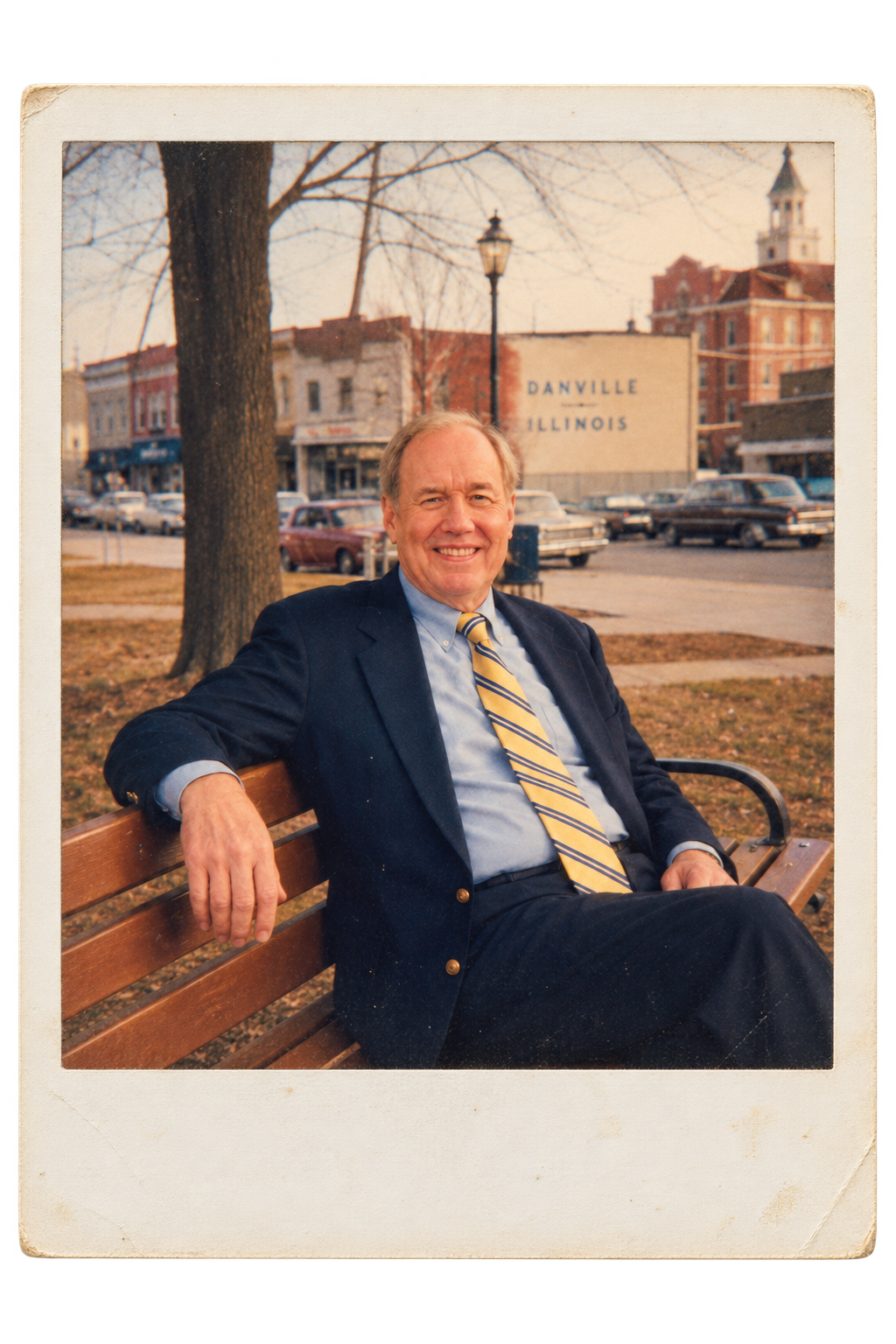
There was a voice that nearly ran Bob's life — and for a long time, did.
It was fluent and convincing. It knew his history better than anyone. It had evidence. It had a long memory and a short fuse and an infallible gift for identifying the exact moment he was most vulnerable and saying, into that moment, the thing most likely to keep him small.
It told him that his worth was conditional — earned through achievement, performance, the approval of people he had decided were the arbiters of whether he was okay. It told him that the version of himself he showed the world was the one that had to be maintained at all costs, because if anyone saw the version underneath, they would leave. It told him that the goal of every day was to stay ahead of the exposure.
Bob was in his thirties before he had a name for this voice. He learned to call it the false self — and once he could name it, he could begin, slowly and imperfectly, to stop letting it run the show.
Where the False Self Comes From
The false self is not native. No child arrives in the world wearing armor. The armor gets built in response to what the world does — the early messages, delivered by the people who mattered most, about what was acceptable and what was not. The parts of you that got love. The parts that got silence, or criticism, or something worse.
The Cherokee legend Bob used to tell — about the two wolves fighting inside each person, one of fear and one of love — is a perfect picture of this. The wolf of fear is the false self: hungry, reactive, convinced that the threats of the past are the truth of the present. The wolf of love is the authentic self: patient, spacious, convinced that underneath the fear there is something that was never actually broken.
The question, as the elder answers it, is: which wolf are you feeding?
Most of us, for most of our lives, are feeding the wrong one. Not because we want to, but because the wolf of fear is so much louder and so much more urgent. It feels like reality. It feels like self-knowledge. It feels like honest assessment, when in fact it is a system installed by old pain, running on outdated software, making predictions about a present that has already changed.
How Bob Learned to Tell the Difference
The distinction between the false self and the authentic self is not always obvious from the inside. The false self does not announce itself as false. It is entirely sincere. It genuinely believes the story it is telling.
Here is what Bob eventually learned to look for. The false self is driven by fear and oriented toward defense. Everything it does is designed to protect the image, secure the position, manage the perception. It is exhausting to live inside. Not because it is evil — it is trying to keep you safe — but because safety defined as image management is a full-time job with no days off.
The authentic self is driven by love and oriented toward connection. It is curious rather than defended. It can be wrong without catastrophe. It can be seen without collapse. It knows — not as intellectual proposition but as lived experience — that its worth is not contingent on performance. That it was loved before it did anything to earn it.
Bob found his way to the authentic self through the years of loss that stripped the performance away. Through contemplative prayer that required him to sit in silence and stop managing the room. Through honest community — people who knew the whole story and stayed. Through the encounter with a love that, as he came to understand it, had never actually required him to be impressive.
The Specific Lie to Watch For
The false self has a signature lie worth naming, because Bob heard it in every person he ever sat with, and he heard it in himself for years before he could hear it clearly:
You are the exception.
Not the good kind of exception — the bad kind. The one that says: this grace, this belonging, this love that seems to be available to other people — it applies to them, not to you. You are too much, or not enough, or too far down the road of your specific failures, or carrying something that puts you just outside the reach of what is being offered.
The false self will take every truth about love and community and hope and add a quiet footnote: for others, not for you.
That footnote is the lie. Bob spent four decades saying so, and he believed it as firmly at the end as he did at the beginning: the footnote is always false.
What to Look For
Notice when you are performing rather than being. When you are managing rather than connecting. When the energy you spend on how you appear has started to crowd out the energy available for how you actually are.
Notice the voice that adds the footnote. The one that says yes, but not for you. Name it. Externalize it. Dispute it. These are the three steps — Notice, Externalize, Dispute — that Bob taught because they worked for him first.
And then look for the moments when the authentic self breaks through. The conversation where you said something real instead of something safe, and the world didn't end. The relationship where you were fully known and not abandoned. The quiet moment of prayer or presence when the performance stopped and something true was briefly, undeniably, available.
Those moments are the data. Collect them. They are evidence against the false self's testimony, and you will need them on the days when that testimony is loud.
The false self is not your enemy. It was built to protect you, and once it did. But you do not need that much protection anymore. You are more than it believes you are, and the love available to you is larger than it is willing to let you see.
You are the beloved. Not a modified, improved, finally-acceptable version of yourself. You, as you are right now, carrying everything you're carrying.
That is where love finds you. It always has.
Bob ended every letter, every session, every goodbye with the same words: Fair winds and following seas. I'll be seeing you.
— A reflection on the life and work of Robert Kenneth Jones (1950–2020).
Bob Jones spent more than four decades quietly innovating in the treatment of addiction and the wounds of childhood abuse. The Next Right Thing continues his archive of recovery, resilience, and faith.